
Legacy Infrastructure, Modern Expectations
Your platform runs on architecture built for a different scale. Every new feature takes longer to ship because the infrastructure underneath wasn't built for it.

Managed cloud for healthcare IT
Aging infrastructure. Compliance risk. No dedicated cloud team. We provide healthcare cloud services built around migration, modernization, and everyday management, so your team can focus on the product instead of the plumbing.
Self-check
Your platform runs on architecture built for a different scale. Every new feature takes longer to ship because the infrastructure underneath wasn't built for it.
Your engineers are building product. Patching schedules, uptime monitoring, and incident response get handled reactively because nobody owns them full-time.
Every new environment, every new integration, every new region adds compliance surface area. Without healthcare-specific cloud expertise, that risk compounds quietly.
Your cloud bill grows faster than your usage explains. Nobody owns cost optimization because nobody has the bandwidth to own it.
Why "just hire an MSP" doesn't work
Most cloud service providers know infrastructure. Few know healthcare. That gap shows up exactly when it matters most: during a migration touching live clinical or claims systems, or when an auditor asks how PHI is handled in transit.
Hyperscalers give you the infrastructure, but they can't give you a team that understands HIPAA-aligned architecture, healthcare data flows, or what "zero-disruption" actually means when the system in question is processing patient records. Generalist cloud providers treat healthcare as one vertical among many. It's our only vertical, so every architecture decision here starts from compliance and clinical continuity rather than a generic cloud playbook adapted after the fact.
Most cloud partners can move your workloads. Few can tell you whether your architecture would survive a HIPAA audit first.
Get a Cloud Readiness AssessmentWhat we build
Monitoring, patching, incident response, and CI/CD pipelines that keep deployments moving, handled continuously so your team isn't paged at 2 a.m. for infrastructure that should run itself.
HIPAA/HITRUST-aligned architecture built in from the first design decision. PHI handling, access controls, and audit trails are part of the plan from day one, never a retrofit after a security review flags a gap.
New builds designed for the cloud, rather than legacy applications forced into it. When lift-and-shift isn't the right answer, our healthcare cloud development services build cloud-native from the ground up.
Infrastructure built for interoperability from the start. FHIR-ready data exchange, IoT and connected-device data streams, and the analytics, BI, and AI/ML workloads your data needs as they grow, without a re-architecture every time a new use case shows up.
What you get
AWS, Azure, and Google Cloud, across compute, containers, databases, identity and access, networking, storage, messaging, analytics, and migration tooling. All three clouds, at real depth, with no house preference steering the recommendation.
Continuous compliance monitoring mapped to HIPAA and HITRUST controls, plus ISO 9001:2015 and ISO 27001:2022 certified delivery processes.
You get a cloud engineer who knows your environment by name. Large MSPs route you through a helpdesk tier; we don't have tiers, and that's the point.
Incidents (production down, PHI at risk) acknowledged and dedicated response team engaged within a few hours of report, a commitment we hold ourselves to and publish here so you can hold us to it too.
Cloud spend reviewed on a defined cadence with optimization recommendations, so nothing gets discovered for the first time at quarter end.
Every migration has documented rollback points defined before cutover begins, never improvised mid-migration.
Migration
Migration is usually the first step toward broader healthcare cloud modernization, and the one most healthcare organizations get wrong first. Migrating a healthcare platform isn't like migrating a standard business application. The systems involved are often live: EHR and PMS platforms, care coordination tools, claims processing, patient-facing portals. PHI is in transit throughout, and compliance obligations don't pause for the migration window.
Every one of those phases starts with Assess, and that's the one conversation worth having before anything else moves.
Start a Migration AssessmentHow we approach it
Map current architecture, data flows, and compliance dependencies before anything moves. This is where most migration risk gets caught early instead of discovered mid-cutover.
Build a phased migration plan sequenced around what can move independently versus what has downstream dependencies. Rollback points get defined before migration starts, not improvised during it.
Execute in stages, with parallel-run periods for systems where a clean cutover isn't acceptable. Live systems keep running while the migration happens underneath them.
Confirm data integrity, compliance posture, and performance against baseline. A migration counts as complete once it's validated, not simply once it's moved.
About Nalashaa
We work exclusively in healthcare cloud engineering. Compliance is the starting constraint every design decision works within, not a checklist completed after the architecture is already built. That focus shows up in how we build, and in who we attract to the team.


in healthcare cloud engineering
practices built into architecture from day one
and ISO 27001:2022 certified delivery
plus delivery centers in Bangalore and Kochi
Case Studies
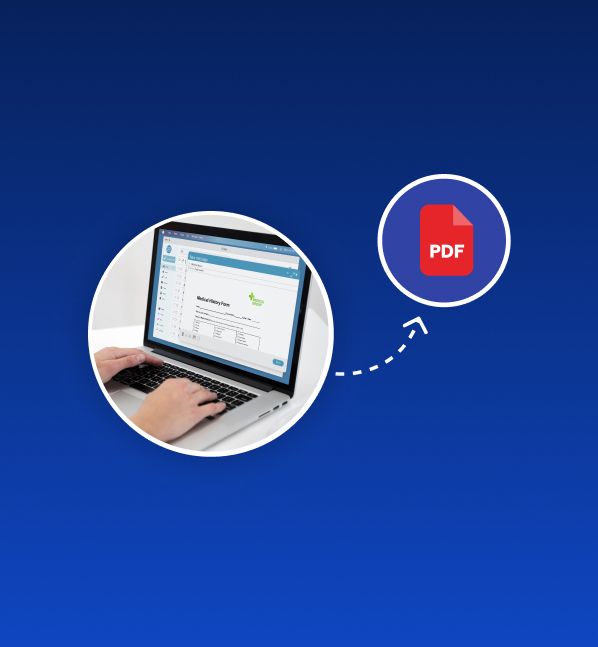
A chiropractic EHR vendor needed a PDF form design feature built directly into their cloud platform: form editing, e-signatures, and template import, without disrupting the live product. Built on Blazor and Syncfusion.
Read the full case study
A US healthcare company needed a patient portal built from scratch on Azure, Meaningful Use Stage 3 compliant, connecting to any FHIR-certified EHR setup without custom integration work per client, including built-in appointment scheduling.
Read the full case study
Get started
Your cloud environment shouldn't be a compliance risk. If either of the projects above sounds like your situation, here's where that conversation starts, with the engineers who'd actually do the work, not a sales call.
Schedule a Cloud Readiness Call
How we work with you
Whether you need a single migration or ongoing healthcare managed cloud services for organizations of any size, from HIT startups to established payers, we scope around what you need.
A focused audit of your current architecture, compliance posture, and cost structure, with a prioritized roadmap at the end.
Varies significantly by system count and data volume. We plan and execute the migration; your team retains ongoing operations afterward.
Continuous monitoring, patching, incident response, and cost optimization for an environment already in the cloud.
We migrate to the environment, then continue managing it, so there's no handoff gap between a completed move and a well-run environment.
Industries we serve
| Segment | Cloud Challenge | Our Approach |
|---|---|---|
| Payers | Claims data at scale, seasonal load spikes | Architecture designed for elastic scaling without compliance gaps during peak volume |
| Providers | EHR uptime and PHI in transit | Migration and operations that treat clinical continuity as non-negotiable |
| HIT Vendors / ISVs | Multi-tenant SaaS architecture | Cloud-native builds designed for multi-tenancy from the start |
| Medical Devices | Data pipelines from connected devices | Infrastructure built for continuous device data ingestion and downstream analytics |
| HIT & Digital Health Startups | Scaling fast without a dedicated ops team | Managed cloud services for healthcare startups sized to move at startup speed without compliance gaps |
Challenge: Claims data at scale, seasonal load spikes
Approach: Architecture designed for elastic scaling without compliance gaps during peak volume
Challenge: EHR uptime and PHI in transit
Approach: Migration and operations that treat clinical continuity as non-negotiable
Challenge: Multi-tenant SaaS architecture
Approach: Cloud-native builds designed for multi-tenancy from the start
Challenge: Data pipelines from connected devices
Approach: Infrastructure built for continuous device data ingestion and downstream analytics
Challenge: Scaling fast without a dedicated ops team
Approach: Managed cloud services for healthcare startups sized to move at startup speed without compliance gaps
Outsourcing day-to-day cloud operations, including monitoring, patching, security, compliance, incident response, and cost optimization, to a specialist team, so your engineers build product instead of maintaining infrastructure. In healthcare specifically, it also means someone owns HIPAA and HITRUST alignment continuously, not just at audit time.
There isn't one. AWS, Azure, and Google Cloud all support HIPAA-eligible services and healthcare-grade compliance. The right choice depends on your existing stack, your EHR integrations, your team's expertise, and your data residency requirements. We work across all three and will tell you honestly if your current platform is the right one to stay on.
Healthcare-specific compliance depth, not general cloud competence. Named accountability rather than a ticket queue. Clear rollback and disaster recovery planning. And a provider willing to tell you when a migration isn't the right move, rather than one that recommends migration regardless of the question.
Yes. Every architecture decision starts from HIPAA/HITRUST-aligned requirements as a design input, not a final review step added after the fact.
Phased migration with parallel-run periods for systems where a clean cutover isn't acceptable, rollback points defined before migration starts, and validation against baseline before calling any migration complete.
PHI handling, clinical system uptime requirements, and compliance continuity change every architecture decision. A generic modernization playbook doesn't account for what happens when the system being modernized touches patient data or live claims processing.
We work across AWS, Azure, and Google Cloud. The right platform depends on your existing stack and workload requirements, not on which provider we prefer to work in.
Continuous monitoring, patching, incident response, uptime management, and cost optimization. Day-to-day operational ownership of the environment, not a quarterly check-in.
Yes. Most healthcare migrations aren't a single cutover. We plan for extended hybrid periods where some systems have moved, and others haven't yet.
Cookies help us deliver our services. By using our services, you agree to our use of cookies Privacy Policy.
