






EHR
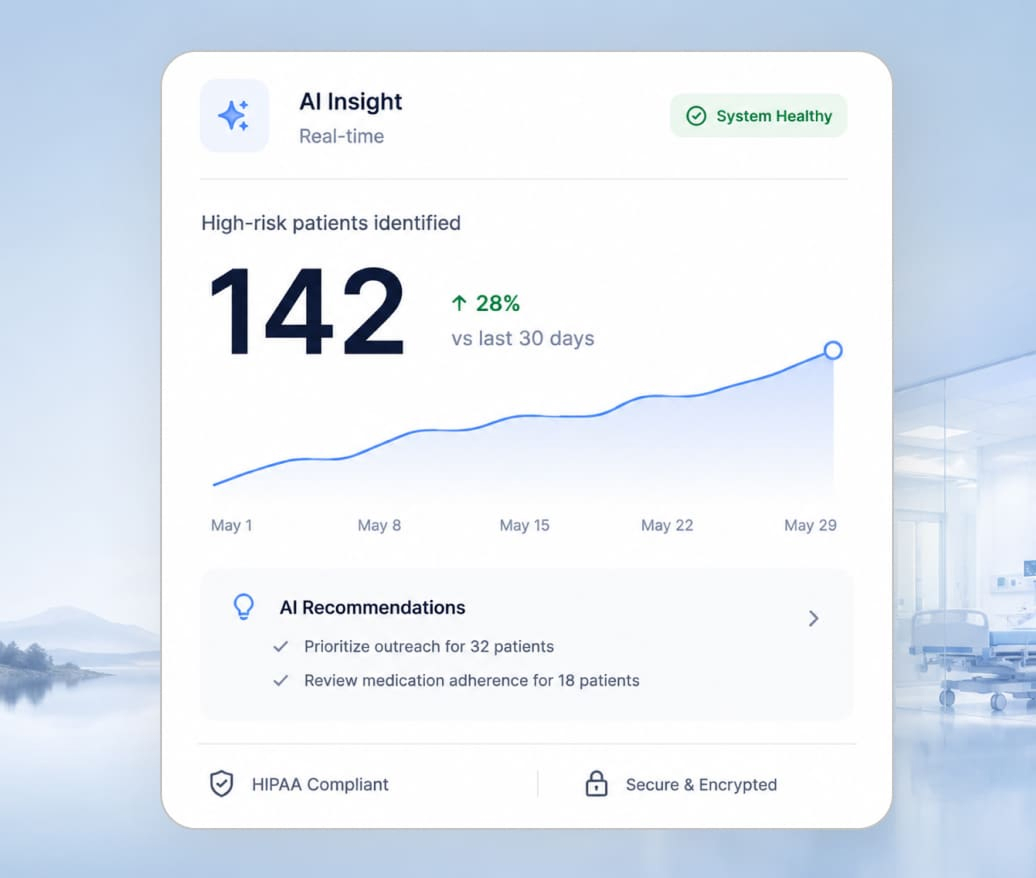
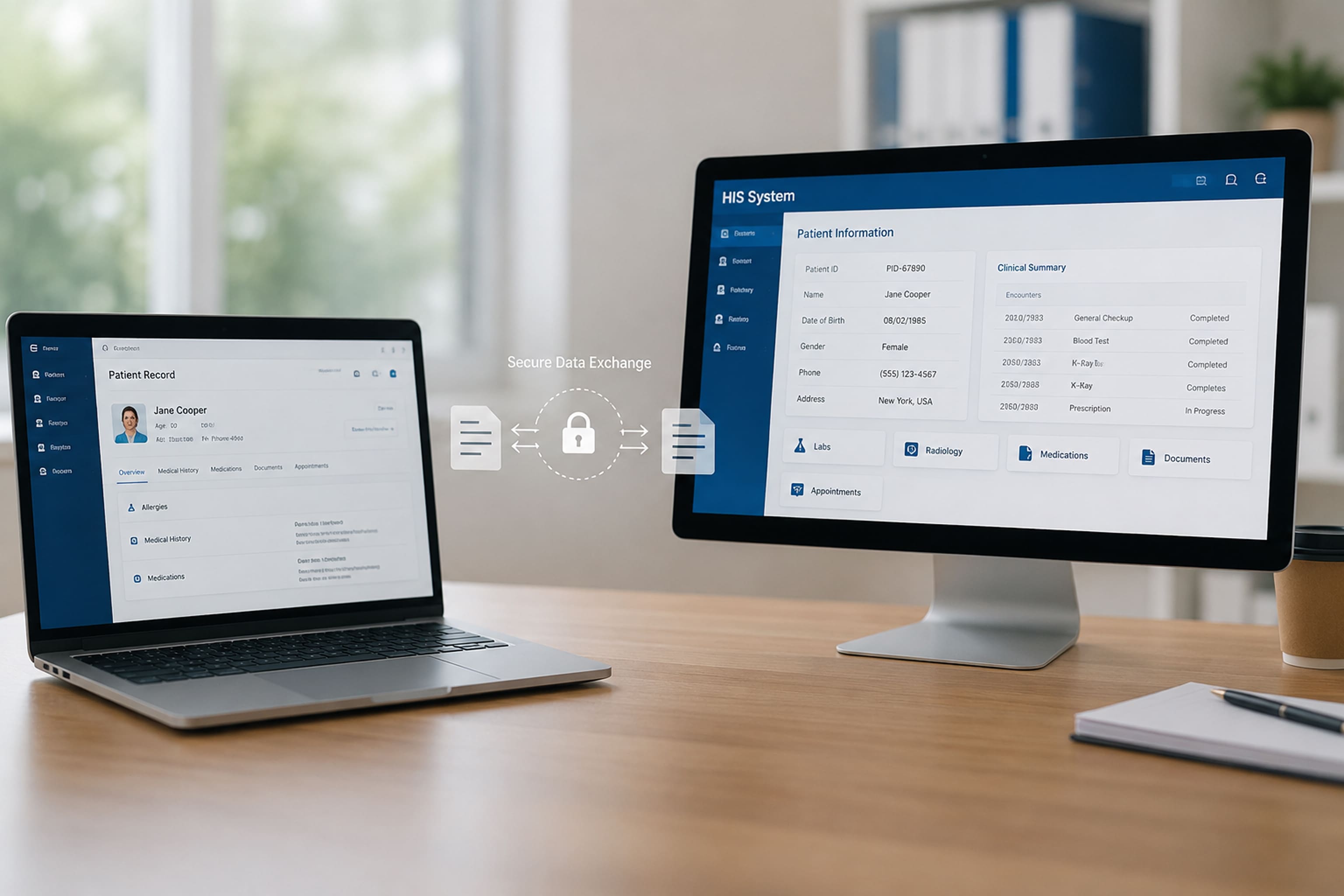
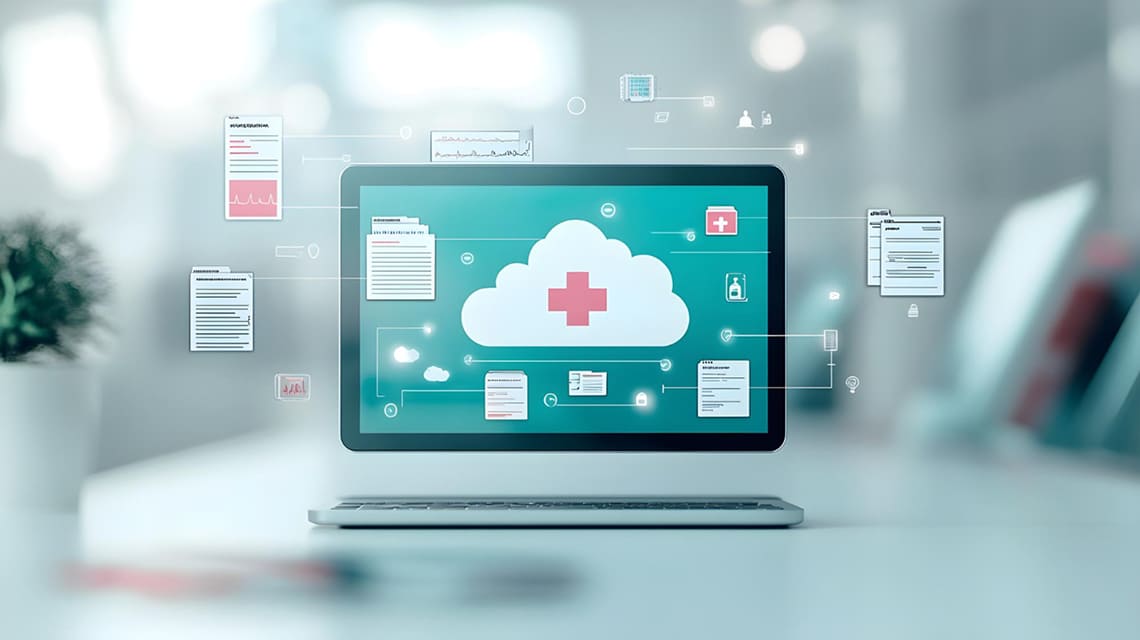
Electronic health record systems that support clinical documentation, care coordination, and patient information access.
Explore

Healthcare IT services and consulting to build, modernize, integrate, and support secure technology across the healthcare ecosystem.
our services
From AI and interoperability to cloud, compliance, and digital health, our services are built to support the systems that healthcare organizations rely on every day.
Use AI to make healthcare operations more efficient, responsive, and insight-driven.
Build and evolve healthcare software products with long-term scalability and usability in mind.
Improve how healthcare systems connect, exchange data, and work together.
Turn healthcare data into insight that supports better planning, visibility, and action.
Modernize healthcare infrastructure for better scalability, flexibility, and performance.
Reduce repetitive work and improve consistency across healthcare processes.
Support healthcare technology delivery with security, privacy, and regulatory awareness.
Create digital healthcare experiences that are easier to use, access, and scale.
Our Market segment
Built to support different parts of the healthcare ecosystem with the right mix of product, platform, integration, and modernization expertise.
we'll help map the right next step
Our solutions
Healthcare runs on a connected mix of clinical, financial, and digital systems. These are the solutions we help organizations strengthen and modernize.
The foundational systems that support care delivery, administration, revenue, and relationship management.
Electronic health record systems that support clinical documentation, care coordination, and patient information access.
Explore

Practice management systems that help healthcare organizations handle scheduling, billing, administration, and daily operations.

Revenue cycle management solutions that support billing, claims, collections, and financial workflow efficiency.
Explore

Healthcare CRM platforms that help manage patient, member, or stakeholder communication and engagement.
Specialized healthcare systems that support diagnostic, imaging, prescription, and department-level workflows.
Radiology information systems that support imaging-related scheduling, tracking, and workflow coordination.
Laboratory information systems that help manage lab operations, test workflows, and result handling.
Picture archiving and communication systems used for storing, retrieving, and sharing medical imaging.
Electronic prescribing solutions that support medication workflows and prescription-related coordination.
Digital healthcare solutions designed to improve access, engagement, scheduling, and user experience.
Applications that support virtual care delivery, remote consultations, and connected care experiences.
Explore
Healthcare mobile applications designed for patient access, self-service, monitoring, or provider support.
Explore
Digital tools that improve communication, participation, and ongoing interaction across the care journey.
Digital check-in tools that improve front-desk efficiency, reduce friction, and support a smoother patient experience.
Solutions that support care beyond traditional in-person settings through monitoring and connected digital experiences.
Remote patient monitoring solutions that support ongoing health tracking and data visibility outside care facilities.
Applications connected to wearable technologies that support health tracking, user engagement, and connected care.
Software solutions that support care delivery, coordination, and operational workflows in home-based care settings.
Solutions built to support long-term care coordination, patient oversight, and broader healthcare outcome initiatives.
Solutions that help organizations manage health outcomes across groups, programs, and broader care populations.
Explore
Platforms and workflows that support care coordination, follow-up, and patient management across care journeys.
Tools that help clinicians and healthcare teams work with timely information and better-informed decision support.
Purpose-driven solutions built for specific healthcare functions and operational needs.
Platforms that support planning, coordination, tracking, and operational workflows related to clinical trials.
Emergency or encounter-driven digital systems that support fast-moving clinical and operational environments.
Healthcare technology must align with care environments, data exchange standards, and regulatory requirements that shape how systems are built, connected, and used.

Support shaped around the realities of different healthcare delivery and care coordination models.
What's covered

Built with awareness of the standards and frameworks that influence healthcare data exchange and system connectivity.
Supported standards

Technology planning and delivery shaped around the requirements that affect healthcare operations, reporting, and compliance-sensitive workflows.
What's covered
Why Choose Nalashaa
Choosing a healthcare IT services provider is about more than technology. Our healthcare IT consulting services start with the systems, constraints, and workflows that shape how your organization runs.
Technology decisions in healthcare affect more than systems. They affect workflows, access, coordination, and operational continuity across connected environments.
Nalashaa supports both established healthcare organizations and emerging healthcare startups with services shaped around real business priorities.
Engagements can be aligned to different timelines, internal team structures, and transformation goals without forcing a one-size-fits-all model.
Healthcare technology needs ongoing improvement, adaptation, and support. Nalashaa works with that reality in mind.
Technology decisions in healthcare affect more than systems. They affect workflows, access, coordination, and operational continuity across connected environments.
Let's map the right way forward
Here is why Nalashaa is trusted by healthcare and technology organizations across the US
Nalashaa stepped in to support design and programming at a critical stage, and it proved to be the right decision. The team delivered outstanding work and helped move the product closer to launch.
 Michigan, USA

Nalashaa has become part of our business strategy because of their domain expertise, flexibility, and the ease of working together.
Idaho, USA

Nalashaa has helped us adapt to changing business needs with broad technology expertise and flexible engagement models that fit the way we work.
Louisiana, USA

We have trusted the Nalashaa team with complex projects that our senior developers did not have the bandwidth to take on. They take time to understand requirements and approach estimates thoughtfully.
USA
We were impressed by their responsiveness, professionalism, and willingness to work during our business hours. We expect to see strong ROI from the RPA initiatives we are completing with them.
USA

Nalashaa delivers accurate project estimates from business requirements, and their code reviews reflect strong technical discipline. They have become an indispensable part of our development team.
USA

Nalashaa's team is an invaluable partner to us; they understood our challenges, questioned ideas, and refined features as product owners. Their approach gave us a smoother system, better coordination, and reliable support as we continue to work together.
USA
Success stories
See how healthcare teams are using AI, integration, and automation to remove friction from everyday workflows.
 Case study
70% faster documentation
Case study
70% faster documentation
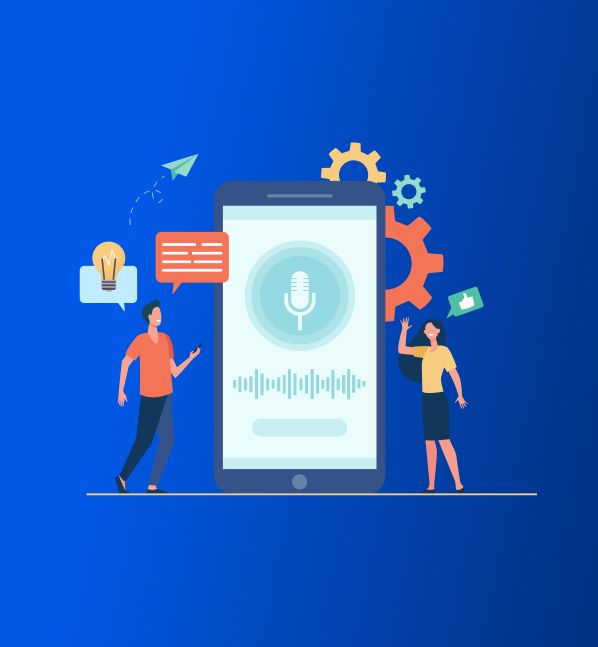
Reducing documentation burden with speech-to-text and AI summarization
Nalashaa built a web-based AI documentation platform that captures provider dictation, converts it to text in real time, summarizes it into structured notes, and supports downstream integration with EMR, billing, and patient-facing systems.
Read the case study Case study
40% faster data retrieval
Case study
40% faster data retrieval
Improving access to patient data with secure, scalable EHR integration
Nalashaa developed a secure integration layer for a U.S.-based AI-augmented care management platform to connect with eClinicalWorks using FHIR APIs, OAuth2, Java middleware, and structured data parsing.
Read the case study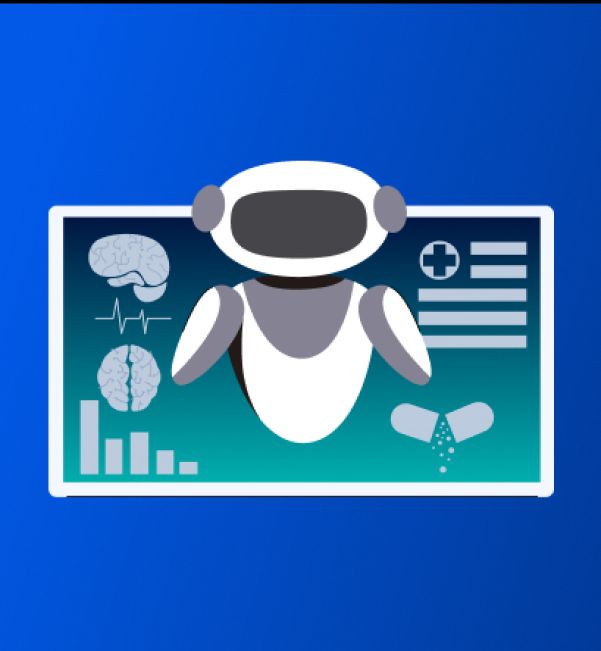 Case study
95% FTE savings
Case study
95% FTE savings
Replacing repetitive insurance verification work with workflow automation
Nalashaa automated insurance eligibility and benefits verification across multiple carrier portals, integrating with supporting systems and validating the process through testing and UAT.
Read the case study
Work with us
Get in touch with a healthcare IT solutions provider that focus on innovative and patient-driven outcomes. healthcare IT solutions that makes a difference
Talk to a healthcare technology expert
Free consultation
Insights
Answers to common questions about healthcare IT services, solutions, integrations, compliance, and digital transformation priorities.
A healthcare IT services company helps healthcare organizations build, modernize, integrate, and support technology systems used across clinical, financial, operational, and patient-facing environments. These healthcare IT services can include software development, interoperability, cloud modernization, automation, compliance support, data solutions, and digital health application development.
Healthcare IT services support different parts of the healthcare ecosystem in different ways. Providers often need better interoperability, workflow efficiency, and digital patient experiences. Payers often focus on claims, data exchange, automation, and member-facing systems. Healthcare businesses and startups often need healthcare software development, platform modernization, and scalable product support.
Healthcare IT services refer to the capabilities a company provides, such as product engineering, interoperability, cloud, automation, compliance, and AI support. Healthcare IT solutions refer to the types of systems or use cases being supported, such as EHR, RCM, telehealth apps, patient engagement solutions, or healthcare CRM platforms.
Yes. A healthcare IT services company can support EHR and RCM environments through product development, modernization, integration, workflow improvement, and connected data exchange. This can include support around clinical documentation systems, billing workflows, claims-related processes, revenue cycle functions, and surrounding healthcare platforms.
A healthcare IT company should be familiar with standards and frameworks that shape healthcare data exchange and connected systems. Depending on the environment, that may include HL7 V2/V3, FHIR, CCDA, EDI X12, NCPDP, DICOM, DIRECT, IHE, QRDA, and HQMF.
Yes. Modern healthcare IT services often include AI and automation where organizations need better efficiency, lower manual effort, improved data handling, and more intelligent workflows. AI can support healthcare operations through document processing, workflow automation, reporting support, intelligent search, and decision-support use cases.
Yes. Healthcare IT solutions can include telehealth apps, mobile health apps, patient engagement solutions, patient scheduling software, check-in tools, remote patient monitoring support, and other digital health experiences designed to improve access, communication, and care continuity.
Interoperability is important because healthcare systems rarely work in isolation. EHRs, payer systems, departmental platforms, patient-facing tools, and connected applications often need to exchange data accurately and reliably. Strong interoperability helps improve coordination, reduce friction, and make healthcare technology more usable across workflows.
Healthcare IT service providers should approach regulated environments with awareness of privacy, security, controlled access, auditability, and compliance-sensitive workflows. In practice, that means building and modernizing systems with healthcare regulations and operational requirements in mind rather than treating compliance as an afterthought.
Organizations typically look for a healthcare IT consulting and development partner when they need to modernize legacy systems, improve interoperability, launch new healthcare products, support digital transformation, strengthen data workflows, or add specialized healthcare software development expertise without building everything internally.
Cookies help us deliver our services. By using our services, you agree to our use of cookies Privacy Policy.